
Laissez-faire
Economic doctrine advocating minimal government intervention in markets.

John Maynard Keynes · Public domain
Laissez-faire is an economic system in which transactions between private individuals are free from any form of economic interventionism, such as subsidies or regulations. The phrase, from French meaning 'let do,' implies that nothing restricts what happens, irrespective of potential consequences. It is a type of economic thought that holds the individual as the basic unit in society, with a natural right to freedom, and views the physical order of nature as a harmonious and self-regulating system.
- origin
- French phrase, popularized by Vincent de Gournay in the 18th century
Lore & Background
When Colbert asked how the state could help commerce, Le Gendre supposedly replied: 'Laissez-nous faire' ('Leave it to us'). Vincent de Gournay, a French Physiocrat, popularized the term, though it predates him and was not coined by François Quesnay as a translation of the Chinese term wu wei.
Reader's Guide
Laissez-faire emerged in mid-18th-century France as a reaction against excessive mercantilist regulations. The Physiocrats, early advocates, placed it at the core of their economic principles, arguing for a 'natural order' under which individuals pursuing self-interest contribute to the general good. They advised the state to restrict itself to upholding private property and individual liberty, removing artificial trade barriers, and abolishing useless laws. Adam Smith further popularized the idea in The Wealth of Nations, viewing the economy as a natural system and the market as its organic part. Though never practiced with full consistency, laissez-faire capitalism became influential, with the term gaining English currency through Physiocratic literature and later the Anti-Corn Law League. In modern usage, conservative politicians and economists often choose the term 'free-market capitalism' in lieu of laissez-faire.
Did You Know?
- The original phrase was 'laissez faire, laissez passer,' with the second part meaning 'let (things) pass.'
- François Quesnay did not coin 'laissez-faire' as a translation of the Chinese term wu wei; the phrase predates him and was popularized by Vincent de Gournay.
From a Merchant's Defiance to a Philosophical Slogan
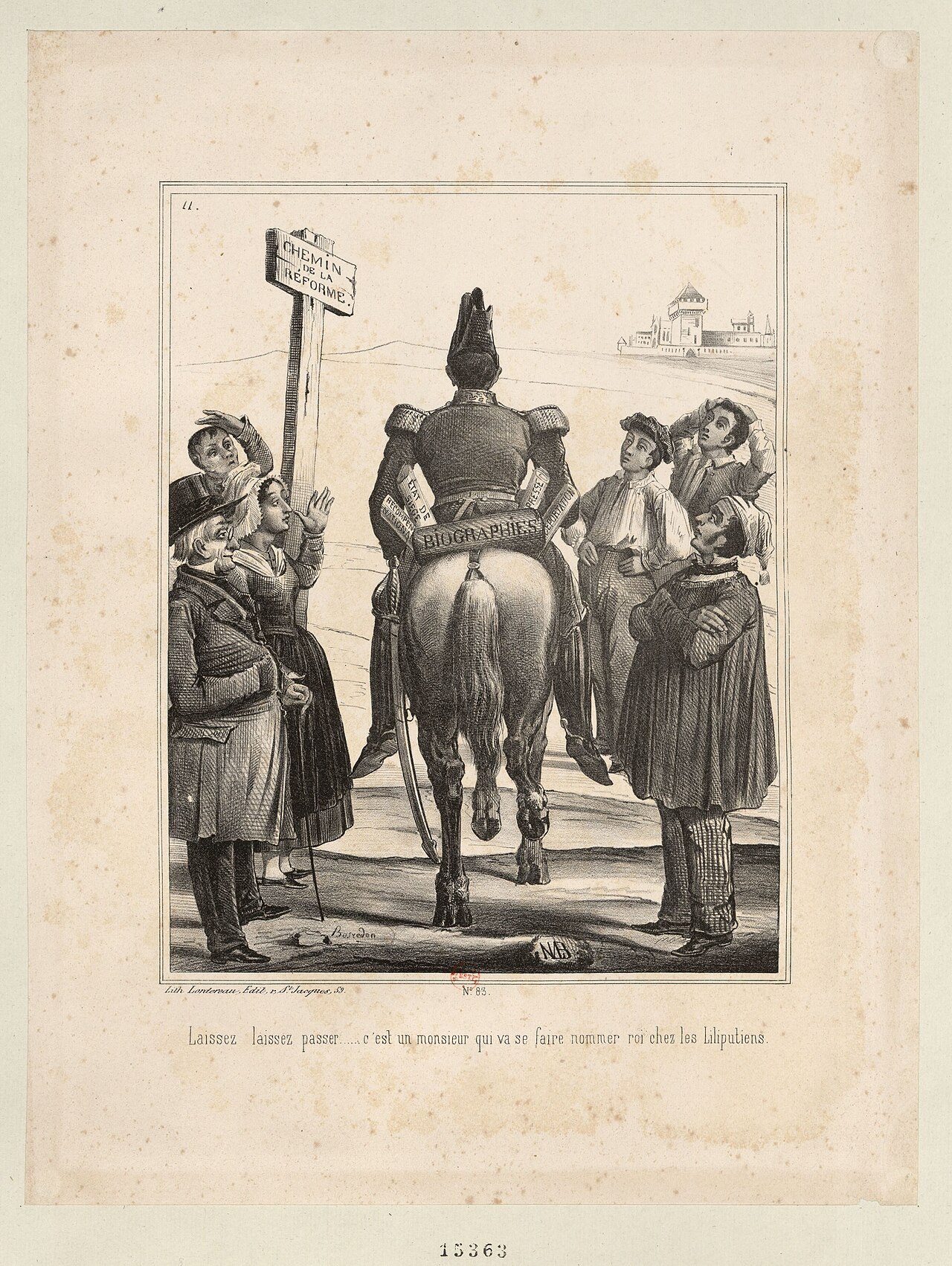
The phrase that would come to define an entire school of economic thought likely sprang from a simple moment of merchant frustration. Around 1681, the French Controller-General of Finances Jean-Baptiste Colbert reportedly asked a delegation of businessmen, led by a man named Le Gendre, how the state might assist their trade. Le Gendre's curt reply—"Laissez-nous faire," or "leave it to us"—captured a spirit of defiance that would echo for centuries. The anecdote did not surface in print until 1751, when the Marquis d'Argenson published it in the Journal économique. Even earlier, the thinker P. S. de Boisguilbert had urged his readers to let nature run its course, and d'Argenson himself favored the plainer motto of governing not too much. It was Vincent de Gournay, a French intendant of commerce active in the 1750s, who stitched these threads into the fuller maxim "Laissez faire et laissez passer," reportedly drawing on François Quesnay's rendering of the Chinese concept of wu wei. Gournay left no formal treatises, yet his personal influence on fellow Physiocrats was immense, and they credited him with both the slogan and the doctrine behind it.
Three Axioms and the Case for Self-Regulation
At its philosophical core, laissez-faire rests on a compact set of assumptions about human society and the natural world. The first axiom holds that the individual, not the collective, is the fundamental unit of social life and the proper standard by which all social calculations should be measured. The second asserts that every person possesses an inherent, natural right to freedom. The third posits that the natural physical world functions as a harmonious, self-correcting system needing no outside manager. Together, these principles lead to a striking conclusion: when individuals pursue their own interests within a framework of private property and personal liberty, the aggregate result benefits the whole. The Physiocrats of eighteenth-century France embraced this logic wholeheartedly, arguing that the state's proper role was limited to protecting property rights, dismantling artificial barriers to trade, and repealing laws they deemed unnecessary. In their view, a well-ordered society did not need a government actively steering the economy; it needed a government that stayed out of the way.
The Physiocrats' Tax Reform and Anti-Mercantilist Stance
The Physiocrats did not merely philosophize; they proposed concrete policy alternatives to the mercantilist regime that had dominated France. Their most distinctive proposal was the impôt unique, a single tax levied on land rent that would replace the sprawling, debilitating web of taxes that had accumulated across the seventeenth century. Their reasoning was elegant in its simplicity: land is not something humans produce but a resource that simply exists in nature, so taxing it does not extract value from the labor of the person being taxed, the way most other taxes do. This made land the only fair and efficient base for a universal levy. Vincent de Gournay, who championed the removal of trade restrictions and the deregulation of French industry, embodied this reformist impulse. The broader Physiocratic project was a direct reaction against the excessive mercantilist regulations of their era. They argued that the natural order functioned successfully without government aid, and that the state should confine itself to upholding private property, individual liberty, and the free movement of goods.
Crossing Borders and Outlasting Its Founders
The French phrase crossed into English-language discourse as Physiocratic literature spread through the late eighteenth century. One of the earliest English appearances may have been George Whatley's 1774 Principles of Trade, co-authored with Benjamin Franklin, which retold the Colbert-and-Le Gendre anecdote first printed by d'Argenson decades earlier. The idea found its most famous proponent in Adam Smith, whose The Wealth of Nations further popularized the principle that markets should be naturally competitive, a rule the earliest advocates had always stressed. Laissez-faire capitalism, though never practiced with full consistency, took shape in the mid-eighteenth century and continued to evolve. Even critics engaged with the concept on its own terms; Herbert Spencer, for instance, distinguished between a "miserable laissez-faire" that passively watches people ruin themselves and a more active form of state provision, warning against the former while acknowledging the latter. In everyday English, the expression has drifted toward a casual sense of laid-back indifference, a far cry from the rigorous philosophical architecture the Physiocrats and their successors built around it.
Gallery




Frequently Asked Questions
What is Laissez-faire in economic and social theory?
Laissez-faire is an economic doctrine that holds market transactions between private parties should proceed without government subsidies, regulations, or other forms of intervention. It treats the individual as the fundamental unit of society and assumes the natural order of the economy is inherently self-regulating.
Where does the term Laissez-faire come from?
The phrase is French for 'let do' or 'let them act,' conveying the idea that nothing should restrict what individuals choose to do in the marketplace. It was popularized as an economic concept by Vincent de Gournay during the 18th century.
Who is credited with popularizing Laissez-faire as an economic idea?
Vincent de Gournay, an 18th-century French figure, is widely credited with bringing the phrase into mainstream economic discourse. His advocacy helped frame minimal state interference in markets as a coherent school of thought.
What core principle does Laissez-faire stand for?
Its central tenet is that private individuals possess a natural right to economic freedom and that the physical order of nature functions as a harmonious, self-correcting system. Under this view, any external regulation or subsidy disrupts that natural balance.
Why is Laissez-faire considered significant in the history of economic thought?
It provided a philosophical foundation for limiting state power over commerce and established the individual—not the government—as the primary actor in economic life. Its emphasis on self-regulating markets continues to shape debates about the proper role of regulation to this day.
More in Economic And Social Concepts 1-20
Spotted an error? Know more?
This is a living reference — every entry is fact-audited, and reader corrections feed straight into our audit queue. Suggest an edit · See this site's audit record