
Monetary policy
Central bank policy affecting money, credit, and economic activity.

Federalreserve · Public domain
Monetary policy is the policy adopted by the monetary authority of a nation to affect monetary and other financial conditions to accomplish broader objectives like high employment and price stability. It has evolved over centuries, from coin debasement and paper money to modern frameworks such as inflation targeting, fixed exchange rates, and money supply targeting. Today most developed countries' central banks conduct monetary policy within an inflation targeting framework, while many developing countries target fixed exchange rate systems.
- field
- Macroeconomics, Monetary Economics
- known_for
- Framework for managing inflation, employment, and exchange rates through tools like interest rates, open market operations, and reserve requirements
- key_tools
- Interest-rate targeting, open market operations, forward guidance, reserve requirements
- primary_objectives
- High employment, price stability (low and stable inflation), economic stability, predictable exchange rates
Lore & Background
Monetary policy has evolved over centuries, along with the development of a money economy. Historians, economists, anthropologists and numismatics do not agree on the origins of money. In the West the common point of view is that coins were first used in ancient Lydia in the 8th century BCE, whereas some date the origins to ancient China. The earliest predecessors to monetary policy seem to be those of debasement, where the government would melt coins down and mix them with cheaper metals. The practice was widespread in the late Roman Empire, but reached its perfection in western Europe in the late Middle Ages. For many centuries there were only two forms of monetary policy: altering coinage or the printing of paper money. Interest rates were not generally coordinated with the other forms of monetary policy during this time.
Reader's Guide
Monetary policy is significant because it provides a framework for central banks to influence economic activity, employment, and inflation through financial channels like interest rates, exchange rates, and asset prices. It is distinct from fiscal policy, which relies on changes in taxation and government spending. In developed countries, monetary policy is generally formed separately from fiscal policy, with modern central banks being independent of direct government control. The gold standard, which fixed currency value to gold, was abandoned after it likely exacerbated the Great Depression. Today no country uses the gold standard. The choice of strategy—inflation targeting, fixed exchange rates, or money supply targeting—depends on a country's stage of development, institutional structure, tradition, and political system.
Did You Know?
- The earliest predecessors to monetary policy were debasement, where governments melted coins and mixed them with cheaper metals.
- Paper money originated from promissory notes called 'jiaozi' in 7th-century China.
- The gold standard is no longer used by any country.
Core Objectives and Strategic Frameworks
Monetary policy is fundamentally a tool wielded by a nation's monetary authority to shape financial conditions in pursuit of broader economic goals. The twin pillars most commonly cited are high employment and price stability, the latter typically understood as keeping inflation low and predictable. Beyond these, some central banks also aim to contribute to overall economic stability or to keep exchange rates with foreign currencies on a predictable trajectory. The strategic approach a central bank adopts depends heavily on its country's level of development. In developed economies, inflation targeting has become the dominant framework, giving the central bank a clear numerical anchor for its decisions. In contrast, the majority of developing nations' central banks anchor their policy to some form of fixed exchange rate system. A third approach, targeting the money supply, was widely embraced during the 1980s but has since lost much of its appeal, though it remains the official strategy in several emerging economies. This divergence reflects how institutional context and economic maturity shape the very definition of what monetary policy is meant to achieve.
Tools and the Transmission Mechanism
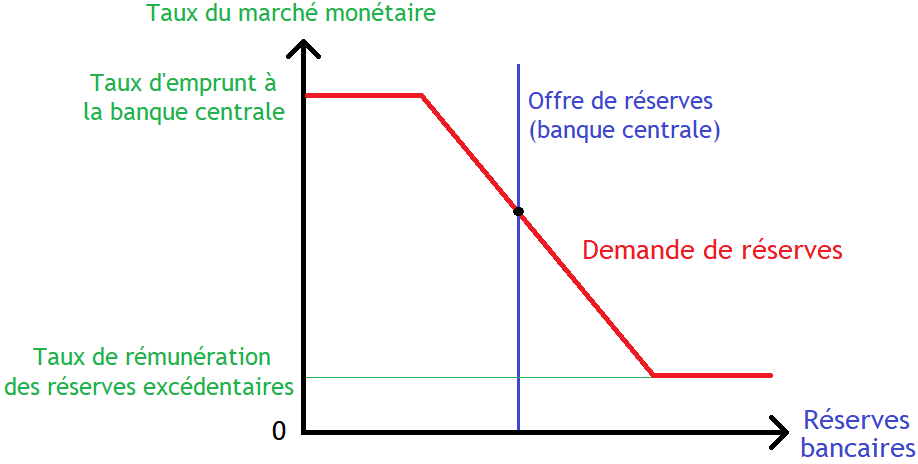
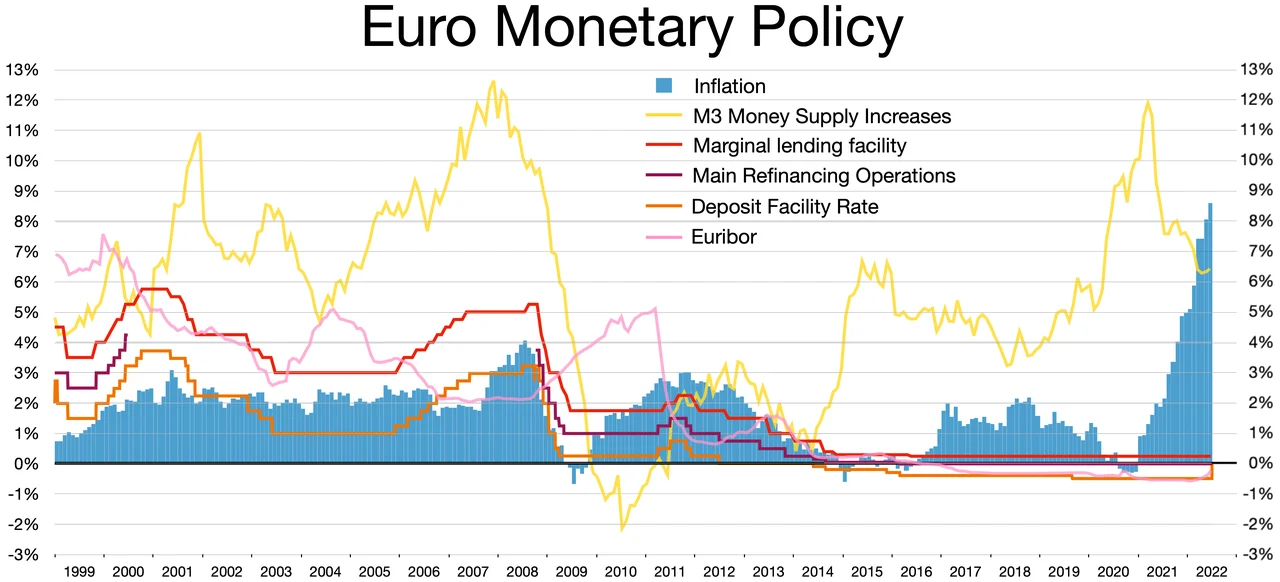
The specific instruments a central bank deploys vary considerably from one country to another, shaped by its stage of development, institutional architecture, tradition, and political system. Interest-rate targeting stands as the primary lever in most jurisdictions, achieved either directly by administratively adjusting the central bank's own rates or indirectly through open market operations. These rate changes ripple through the economy via a network of channels collectively called the monetary transmission mechanism, influencing general economic activity, employment, inflation, and exchange rates. Beyond rates, central banks may employ communication strategies such as forward guidance, and in some countries, the setting of reserve requirements plays a role. In practice, monetary policy is commonly described as either expansionary, lowering rates to stimulate activity, employment, and inflation, or contractionary, dampening those same variables. This toolkit operates through financial channels including interest rates, exchange rates, and asset prices, distinguishing it clearly from fiscal policy, which relies on taxation and government spending to manage business-cycle swings like recessions.
Ancient Roots and the Birth of Paper Currency
The story of monetary policy stretches back millennia, intertwined with the very invention of money. While scholars across history, economics, anthropology, and numismatics disagree on where money first appeared, the Western consensus points to ancient Lydia in the eighth century BCE as the birthplace of coinage, though some trace origins to ancient China. The earliest recognizable monetary policies involved debasement, governments melting down coins and blending them with cheaper metals, a practice widespread in the late Roman Empire and refined in western Europe during the late Middle Ages. For centuries, only two levers existed: altering coinage or printing paper money, with interest rates largely uncoordinated with these actions. Paper money itself emerged from promissory notes called jiaozi in seventh-century China, initially circulating alongside copper coins rather than replacing them. The Yuan dynasty later made paper currency the predominant medium but, facing severe shortages of specie to fund wars, printed it without restraint, triggering hyperinflation, a cautionary tale that echoes through monetary history.
The Gold Standard and Its Collapse
The founding of the Bank of England in 1694, granted the right to print notes backed by gold, marked a turning point: monetary policy began to take shape as something distinct from direct executive action. Between 1870 and 1920, industrialized nations built out their central banking systems, with the Federal Reserve in 1913 among the last. By then, the central bank's role as lender of last resort was well established, and economists, buoyed by the marginal revolution, increasingly recognized that interest rates influenced decisions across the entire economy by altering opportunity costs. Under the gold standard, a nation's currency was fixed to the value of gold, maintained by the government's promise to buy or sell gold at a set price. Central banks had to adjust interest rates almost monthly to defend this peg, a requirement that could prove harmful to employment and general economic activity. Many economists now believe these rigid policies likely worsened the Great Depression of the 1930s, ultimately hastening the gold standard's demise and the search for a more flexible international monetary framework.
Gallery



Frequently Asked Questions
Who is Monetary policy?
Monetary policy is the macroeconomic framework through which a nation's central bank shapes money, credit, and financial conditions to steer the broader economy. It sits at the intersection of macroeconomics and monetary economics, serving as the primary lever governments use to influence economic outcomes without directly legislating spending.
What are Monetary policy's powers/role?
Its main tools include adjusting interest rates, conducting open market operations, issuing forward guidance, and setting reserve requirements for commercial banks. Through these levers, it can tighten or loosen credit availability to cool inflation or stimulate employment.
How does Monetary policy's story end?
There is no single ending; instead, the framework has continuously evolved from ancient coin debasement and early paper currency to today's sophisticated systems. In most developed economies, central banks now operate under inflation-targeting mandates, while many developing nations anchor their policy around fixed exchange-rate arrangements.
Why is Monetary policy important?
It is the principal mechanism for maintaining price stability, supporting high employment, and keeping exchange rates predictable—conditions that underpin long-term economic growth. Without it, economies would be far more vulnerable to inflationary spirals, deflationary shocks, and currency crises.
What are Monetary policy's primary objectives?
Its core goals are high employment, low and stable inflation, overall economic stability, and predictable exchange rates. These objectives guide every decision about interest rates, money supply, and credit conditions that a central bank makes.
More in Economic And Social Concepts 1-20
Spotted an error? Know more?
This is a living reference — every entry is fact-audited, and reader corrections feed straight into our audit queue. Suggest an edit · See this site's audit record