
Land reform
Reforms altering land ownership, use, and tenure systems.

Unknown author · Public domain
Land reform, also known as agrarian reform, involves changing laws, regulations, or customs regarding land ownership, use, economics, and transfers. It is a contentious process because land drives social, political, and economic outcomes, and reforms can range from large-scale redistribution to regulatory improvements.
- field
- Land policy and agrarian reform
- known_for
- Modifying institutional arrangements governing land possession and use
- key_concepts
- Land ownership, land tenure, formal and informal land systems
- associated_ideologies
- Communism, socialism, colonialism, electoral mobilization
- notable_advocates
- Henry George, Hernando de Soto
Lore & Background
Land reform may consist of government-initiated property redistribution, often transferring agricultural land from wealthy or noble owners to those who work it, with or without compensation. It can also involve moving land from individual ownership to government collectives, or the reverse. The common characteristic is modification of existing institutional arrangements for land possession and use. Land ownership and tenure vary across regions; Western conceptions emphasize individual ownership formalized through titles, while many African traditions involve communal use by families or villages with rights conveyed orally. Formal or statutory systems contrast with informal or customary ones. Examples of land control forms include feudal fiefdoms, fee simple, leaseholds, sharecropping, and collective ownership. Motivations for land reform are deeply political. In the 20th century, many reforms emerged from communism or socialism; in the 19th century, colonial governments changed land laws to consolidate power. More recently, electoral mobilization and patronage have driven reforms, as in Robert Mugabe's Zimbabwe. Henry George argued for a land value tax instead of physical redistribution, while Hernando de Soto promoted formal property rights to help the poor access credit.
Reader's Guide
Land reform is significant because it reshapes the structure of society by altering land rights, which are linked to state formation, economic growth, inequality, political violence, and identity politics. Arguments for reform focus on potential benefits like eradicating food insecurity, alleviating rural poverty, and resolving conflicting land laws, especially in former colonies. De Soto's ideas influenced international development organizations to support formalization of land rights, though evidence of economic benefits remains inconclusive. Land reforms in Japan, Taiwan, and South Korea are credited with contributing to industrial development through equitable distribution. Arguments against reform are noted but not detailed in the source. The process remains contentious, with tensions between those who lose and gain from redefinitions of land control.
Did You Know?
- Land reform can involve transferring land from individual ownership to government-owned collective farms, or the opposite.
- In many parts of Africa, land was historically used by extended families or village communities, with rights conveyed orally.
- Henry George argued for a land value tax to capture unearned increment for public benefit instead of physical land division.
- Hernando de Soto's ideas about formal property rights influenced the World Bank and other development organizations.
Scope and Forms of Reform
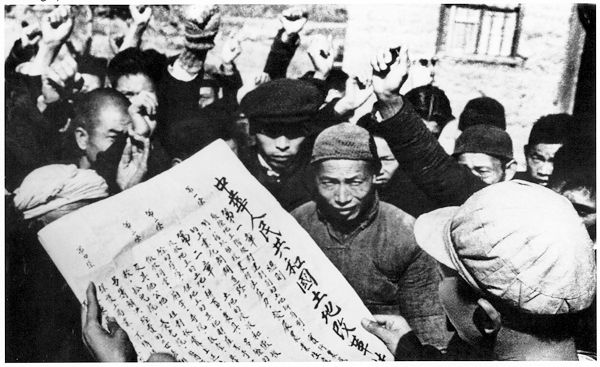
Land reform, sometimes called agrarian reform, encompasses the alteration of laws, regulations, or customs that govern how land is owned, used, transferred, and valued economically. The process can be set in motion by governments, by organized interest groups, or through revolutionary upheaval. In its most recognizable form, it involves the redistribution of agricultural property from a concentrated group of wealthy or noble holders—those controlling plantations, vast ranches, or agribusiness estates—into the hands of the people who actually work the soil. Compensation for such transfers ranges from token payments to full market value, or may be entirely absent. Yet reform is not limited to this one direction. In some historical contexts, individual smallholdings, even peasant plots, were absorbed into state-owned collective farms; in others, the reverse occurred, with collective holdings broken back into private parcels. At its core, every land reform shares one defining trait: it modifies or replaces the institutional arrangements that determine who possesses and uses land, whether through sweeping ownership transfers or through subtler regulatory adjustments to land administration.
Cultural and Legal Concepts of Land Control
The meaning of controlling land shifts dramatically across cultures and legal traditions, which is a central source of tension in any reform effort. In Western legal systems that evolved over several centuries, land control is increasingly framed as individual ownership, formalized through documents like land titles. By contrast, in many parts of Africa historically, land belonged not to a single person but to an extended family or village community, with different members holding different rights to access it for different purposes at different times—rights often passed down through oral tradition rather than written records. Scholars distinguish formal or statutory systems, tied to individual ownership, from informal or customary systems, tied to tenure and use. The vocabulary of land control is remarkably diverse: fee simple under common law represents the most complete ownership interest; other arrangements include leaseholds, sharecropping, life estates, fee tail, easements, the well-field system, run rig, kibbutz and moshav models, satoyama practices, and cooperative or corporate share-based access. Recognizing this spectrum is essential, because any reform that redefines who controls land inevitably creates winners and losers whose very understanding of property is being reshaped.
Political Drivers and Ideological Debates
Land reform is inseparable from politics, and the motivations behind it have shifted across eras and regions. In the nineteenth century, colonial administrations frequently rewrote land-ownership laws to consolidate political authority or to serve extractive colonial economies. In the twentieth century, reforms were often explicitly rooted in ideological commitments to communism or socialism. In more recent decades, analysts have pointed to electoral mobilization and the deployment of land as a patronage resource as driving forces, citing the extensive redistributive campaigns under Robert Mugabe in Zimbabwe as a prominent example. Within the broader ideological debate, nineteenth-century political economist Henry George offered a distinctive counterpoint in his 1879 work Progress and Poverty. George argued that physically parceling land among smallholders failed to address the economic root of poverty, because land speculation and the private capture of economic rent would eventually reconcentrate wealth. Rather than confiscation or division, he proposed a land value tax to capture the unearned increment of rising land values for public benefit, socializing land rent while leaving actual use in private hands.
Consequences, Controversy, and Long-Term Impact
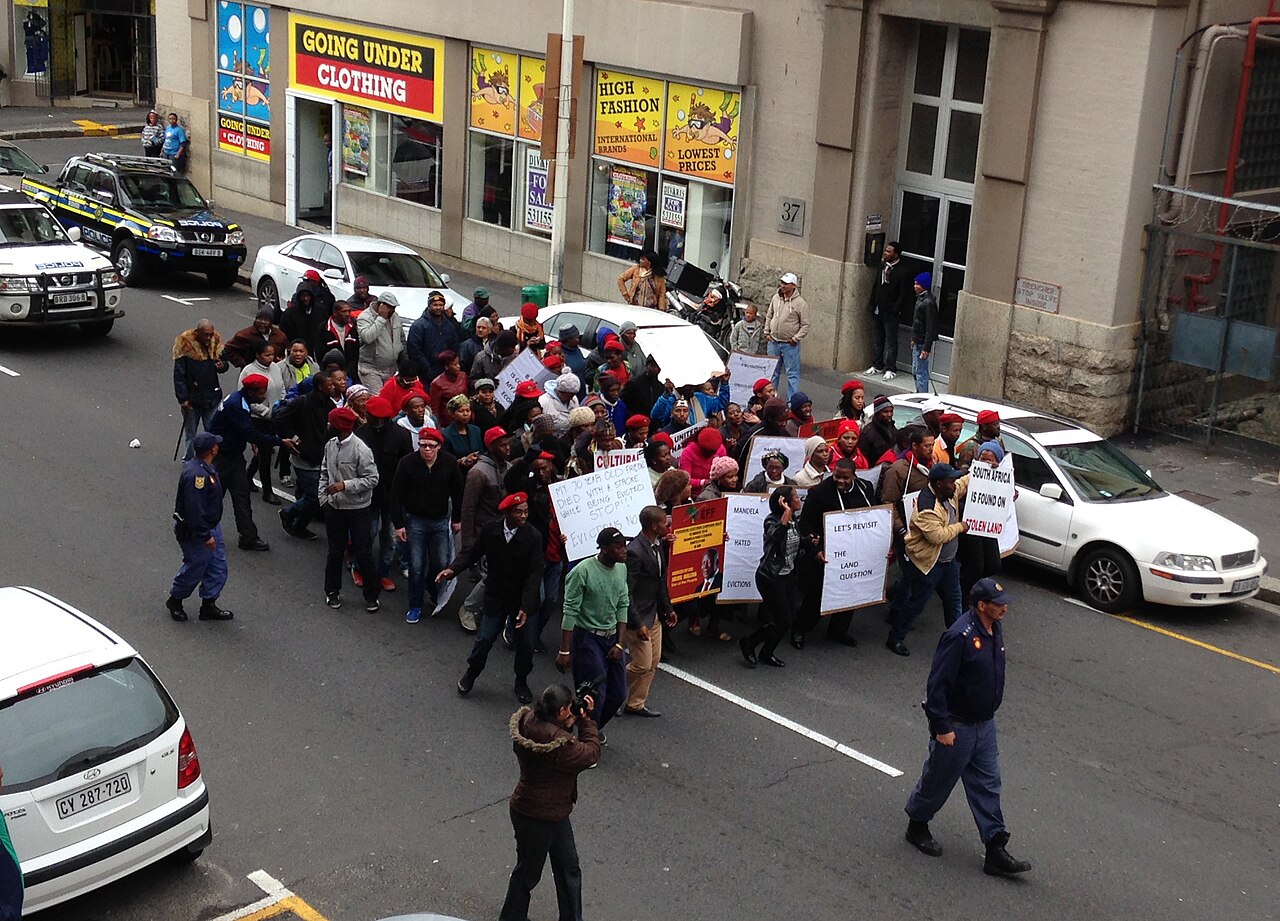
Because land sits at the intersection of social, political, and economic life, reform efforts are among the most contentious in governance. The structure and distribution of land rights have been linked to state formation, patterns of economic growth, levels of inequality, episodes of political violence, and identity politics, making the consequences of any reform deeply consequential for the long-term architecture of society. The very act of redefining what it means to access or control land generates friction between those who stand to gain and those who stand to lose, particularly when formal statutory systems are imposed over customary or tenure-based arrangements. Proponents of reform, especially in developing countries, emphasize potential benefits such as reducing food insecurity and alleviating rural poverty through greater land formalization. These arguments gained particular momentum after the publication of The Mystery of Capital, which highlighted how formal legal recognition of property rights could unlock economic potential. Yet the process remains fraught, as the stakes—livelihoods, identity, political power—ensure that land reform is never merely a technical adjustment but a profound reshaping of social order.
Gallery


Frequently Asked Questions
What is Land reform?
Land reform, sometimes called agrarian reform, refers to the process of altering the legal, regulatory, or customary frameworks that govern who owns land, how it is used, and how it changes hands. It can involve sweeping redistribution of property or more modest adjustments to tenure rules and registration systems.
Who are notable advocates linked to Land reform?
Thinkers like Henry George and Hernando de Soto are frequently cited as influential voices in the land reform debate. George argued for a single tax on land value, while de Soto focused on how formalizing property rights could unlock economic potential for the poor.
What core concepts does Land reform deal with?
The field centers on land ownership, land tenure, and the distinction between formal and informal systems of holding and transferring land. These concepts shape how access to land translates into economic opportunity and social standing.
Why is Land reform considered so contentious?
Because land underpins so many social, political, and economic outcomes, any shift in who controls it tends to provoke strong opposition from entrenched interests. Reforms can range from modest regulatory tweaks to radical redistribution, and each option carries significant stakes for different groups.
Which ideologies or movements is Land reform most associated with?
Land reform has deep roots in communist and socialist thought, where collective or state ownership of land was a central policy goal. It has also served as a tool of colonial administration and as a lever for electoral mobilization in various political contexts.
More in Economic And Social Concepts 1-20
Spotted an error? Know more?
This is a living reference — every entry is fact-audited, and reader corrections feed straight into our audit queue. Suggest an edit · See this site's audit record