
Petition
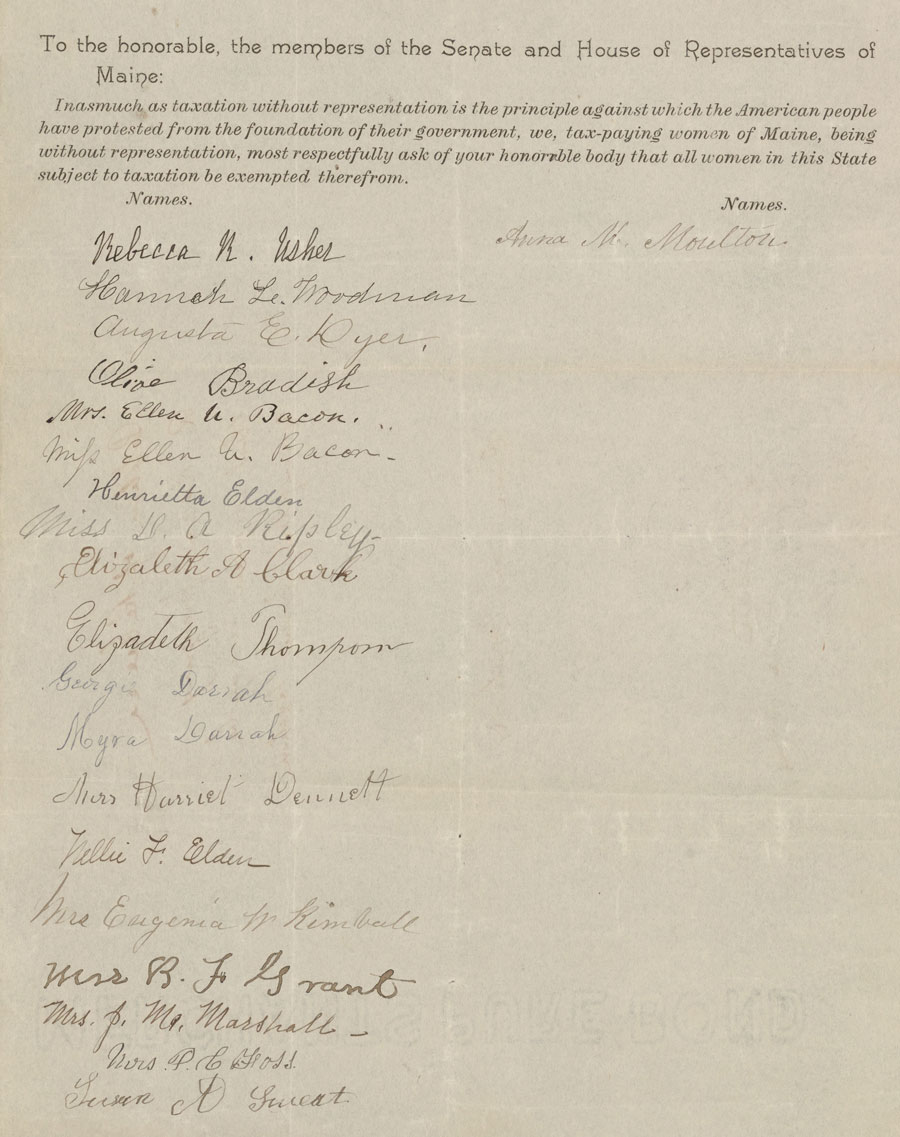
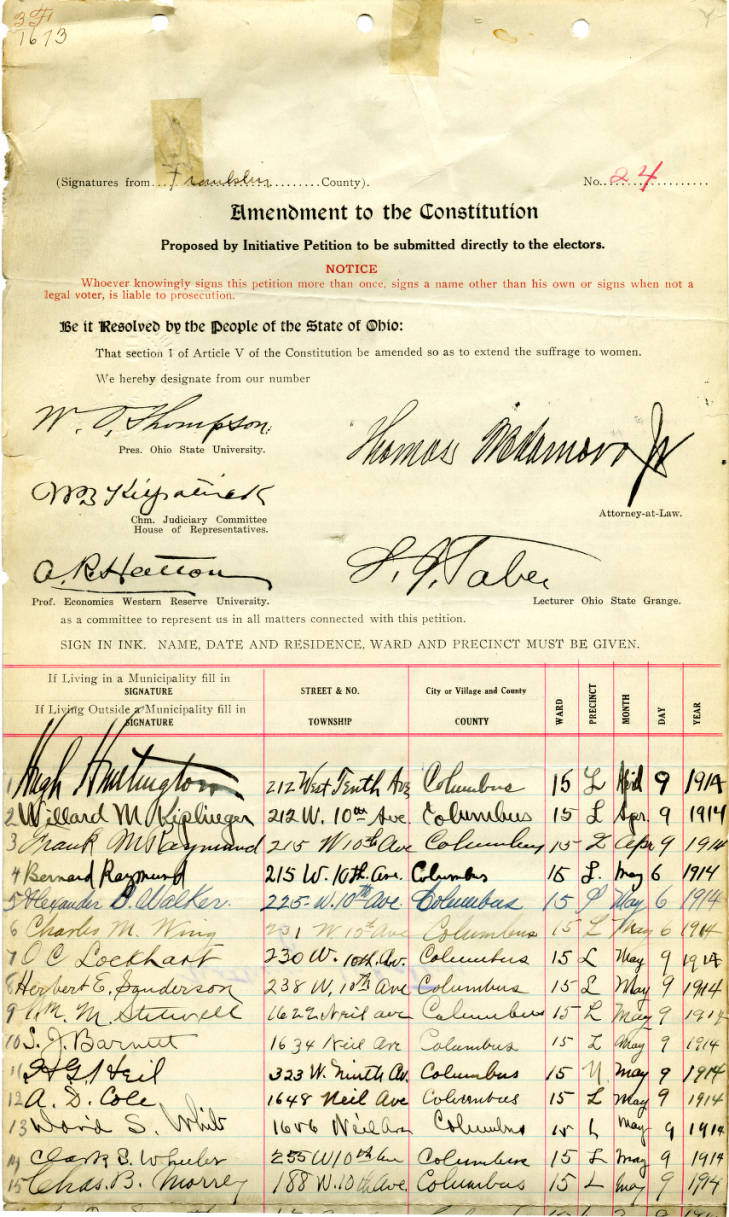
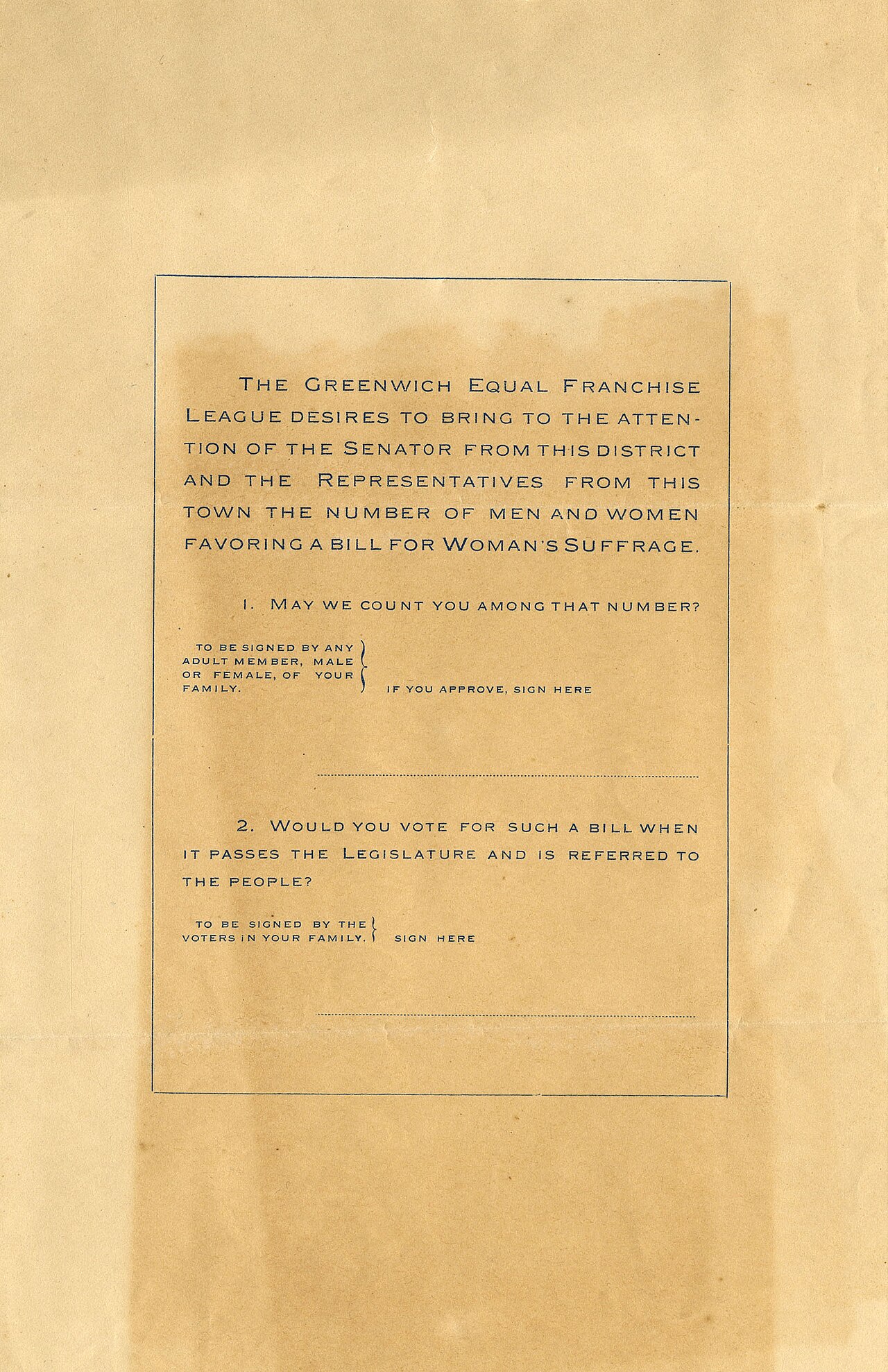
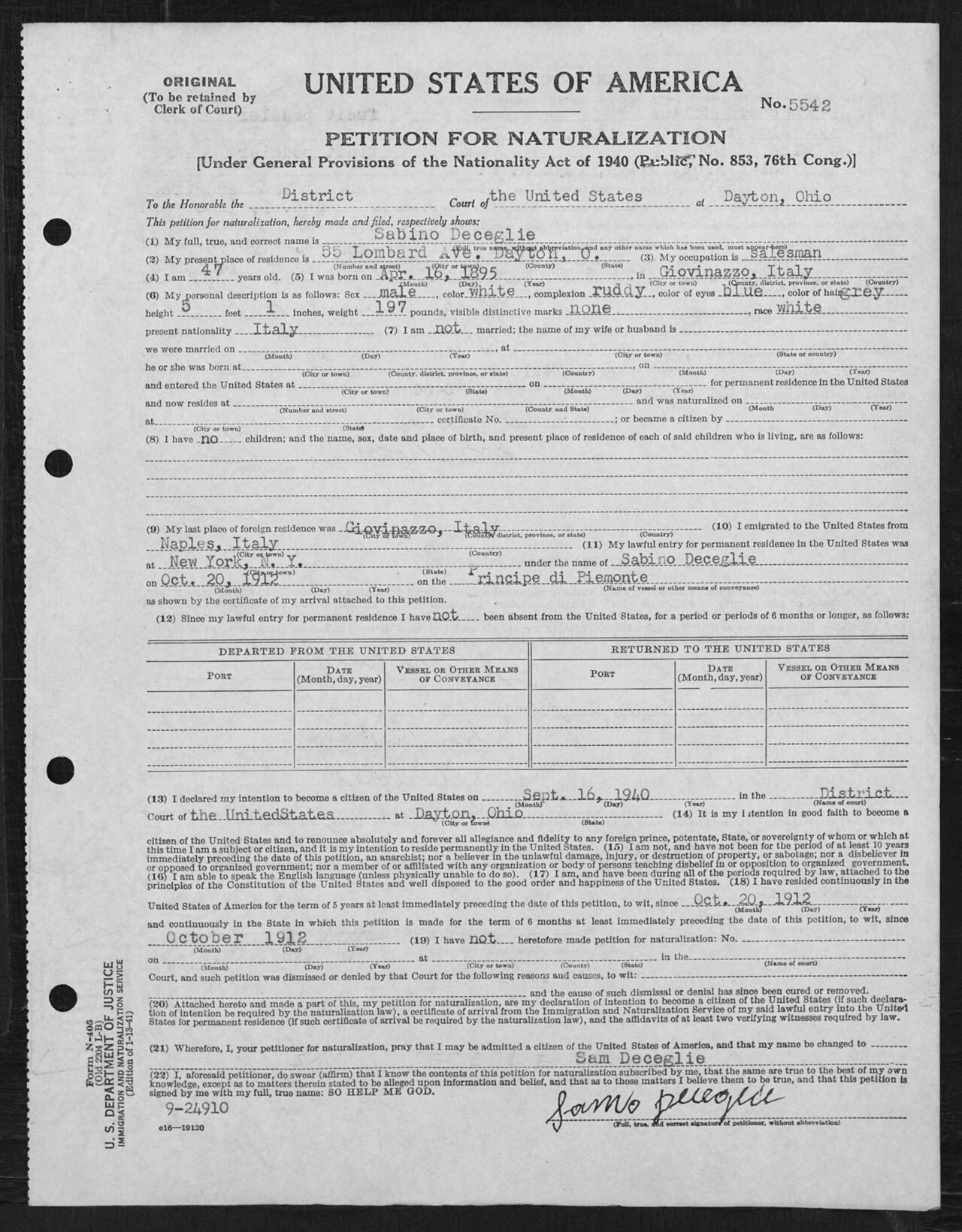
A formal request to an authority, often signed by many.

Connecticut Woman Suffrage Association · Public domain
A petition is a request to do something, most commonly addressed to a government official or public entity. Petitions to a deity are a form of prayer called supplication. In the colloquial sense, a petition is a document addressed to an official and signed by numerous individuals. A petition may be oral rather than written, or may be transmitted via the Internet.
- First documented
- Made by slaves building pyramids in Ancient Egypt
- Legal use
- Title of a legal pleading that initiates a legal case
- U.S. constitutional basis
- Petition Clause of the First Amendment
Lore & Background
The first documented petitions were made by slaves building pyramids in Ancient Egypt who petitioned for better working conditions. In pre-modern Imperial China, petitions were always sent to an Office of Transmission where court secretaries read petitions aloud to the emperor. Petitions could be sent by anybody, from a scholar-official to a common farmer, although the petitions were more likely read to the emperor if they were persuasive enough to impeach questionable and corrupt local officials from office. Inhabitants of the Ottoman Empire, as individuals and as groups, had the right to petition local representatives of the empire or to petition the sultan directly. Hundreds of thousands of petitions were archived in Istanbul between the 15th and 20th centuries.
Reader's Guide
Petitions have served as a fundamental tool for individuals and groups to communicate requests to authorities across cultures and centuries. From ancient Egyptian slaves to modern online platforms, the act of petitioning has evolved but retained its core purpose of seeking redress or change. In legal contexts, a petition can initiate a lawsuit seeking non-monetary relief, such as a writ of mandamus or custody of a child. The right to petition is enshrined in the First Amendment to the U.S. Constitution, guaranteeing the right 'to petition the Government for a redress of grievances.' Historically, petitions contributed to the development of legislative power in England and jurisprudence in the Ottoman Empire. In modern times, petitions are used to qualify candidates for ballot access, launch recall elections, and exert moral force, as seen in the campaign to free Nelson Mandela. Online petition platforms like Change.org and OpenPetition have made petitioning more accessible, with millions of users worldwide. Recent research has highlighted therapeutic benefits of petitioning, including meaning-making and empowerment.
Did You Know?
- The first documented petitions were made by slaves building pyramids in Ancient Egypt.
- In pre-modern Imperial China, petitions were read aloud to the emperor by court secretaries.
- The Petition Clause of the First Amendment to the U.S. Constitution guarantees the right to petition the government.
Theoretical Frameworks and the Elusive Definition of Class
Social class refers to the division of a population into hierarchical tiers, most commonly recognized as working, middle, and upper strata. Whether a person belongs to a particular tier is typically assessed through education, wealth, occupation, income, and the subculture or social network to which they attach themselves. Despite its everyday ubiquity, scholars across sociology, political science, anthropology, and social history have never reached a unified definition. Some observers contend that ongoing social mobility dissolves class boundaries altogether. In common usage, the term is often treated as synonymous with socioeconomic class, grouping people who share similar social, economic, cultural, political, or educational standing. Academics, however, draw a sharper line: social class denotes a stable cultural inheritance, while socioeconomic status describes economic circumstances that can shift over a lifetime. Karl Marx defined class by one's relationship to the means of production: the proletariat work but do not own those means, while the bourgeoisie live off the surplus generated by workers' labor. Max Weber contrasted class, determined by economic position, with social status (Stand), which he tied to prestige rather than production relations. The word traces back to the Latin classis, originally used by census officials to sort citizens by wealth for military service obligations.
Hierarchies in Ancient Egypt
The class structure of ancient Egypt offers one of the earliest documented examples of social stratification. At the apex sat scribes and government officials, a group colloquially called the "white kilt class" because the bleached linen garments they wore marked their rank. These elites prominently showcased their standing through art and literature. Beneath them operated priests, physicians, and engineers who had received specialized training. Farmers constituted the largest segment of the population, yet the agricultural output they produced was owned by the state, temples, or noble families holding the land. Farmers also bore a labor tax and were compelled to perform corvée work on irrigation and construction projects. Artists and craftsmen ranked above farmers but remained under state direction, laboring in temple-attached workshops and drawing pay from the state treasury. The system was not entirely rigid; a person of modest origins could climb to a high position. The ancient Egyptians regarded men and women across all classes as fundamentally equal before the law, and even the poorest peasant held the right to petition the vizier and his court for redress. Slavery in the modern sense remains debated among scholars, though indentured servants could purchase their freedom or even attain nobility.
Law, Regulation, and the Shaping of Class Boundaries
Throughout history, societies have frequently codified class distinctions into formal law. In various times and places, permitted modes of dress were strictly regulated, with sumptuous attire reserved exclusively for the highest ranks and aristocracy. Sumptuary laws specifically dictated which garments and jewelry were appropriate for a given social rank and station. In Europe, such regulations became increasingly widespread during the Middle Ages. These legal distinctions, however, proved susceptible to change as societies evolved. In some cases, the boundaries between classes nearly vanished entirely; for instance, the distinction between a patrician and a plebeian was almost erased during the late Roman Republic. In ancient Greece, the older clan-based social structure gave way to class divisions as the clan system became too small to sustain the needs of a growing population. The division of labor played an essential role in this transition, as increasing specialization created new categories of social position. The shift from clan to class marked a broader cultural transformation: hereditary characteristics lost their former significance as the primary indicator of social standing, while wealth and income gained prominence as the measures by which a person's position in the hierarchy was judged.
Philosophical Debates on Inequality and Property
Jean-Jacques Rousseau exerted a profound influence on the political ideals that fueled the French Revolution, largely through his analysis of inequality and social class. He held that human beings are born naturally pure and good, and that any corruption or evil is learned through social development. In his view, the very process of building society suppresses this innate goodness. Rousseau identified private property as the principal source of social ills, arguing that the value attached to owned property generates inequality. He theorized that eliminating private property would produce widespread equality, yet he simultaneously acknowledged that some degree of social inequality would persist given how societies are structured and governed. Later Enlightenment thinkers took a different stance, viewing inequality not as a flaw but as a valuable and essential driver of societal development and prosperity. They recognized that private ownership of specific resources allows owners to store those resources and profit from their scarcity, thereby generating competition between classes. These thinkers regarded such competition as necessary, and they saw the resulting stratification as maintaining a clear and distinct separation between the lower and upper tiers of society.
Gallery
Frequently Asked Questions
What is a petition in its most basic sense?
A petition is a formal request directed at an authority or public body, asking them to take a specific action. It is typically signed by a group of individuals to show collective support, though it can also be delivered orally or through digital channels.
What role does a petition play in the legal system?
In court proceedings, a petition serves as the initial pleading document that formally opens a case before a judge. It sets out the parties involved and the relief being sought, effectively kicking off the litigation process.
How does the U.S. Constitution protect the right to petition?
The First Amendment's Petition Clause guarantees citizens the right to appeal to the government for redress of grievances. This constitutional protection means individuals can collectively ask public officials to change policy without fear of retaliation.
More in Economic And Social Concepts 1-20
Spotted an error? Know more?
This is a living reference — every entry is fact-audited, and reader corrections feed straight into our audit queue. Suggest an edit · See this site's audit record