
Political system
A system defining government decision-making and authority allocation.

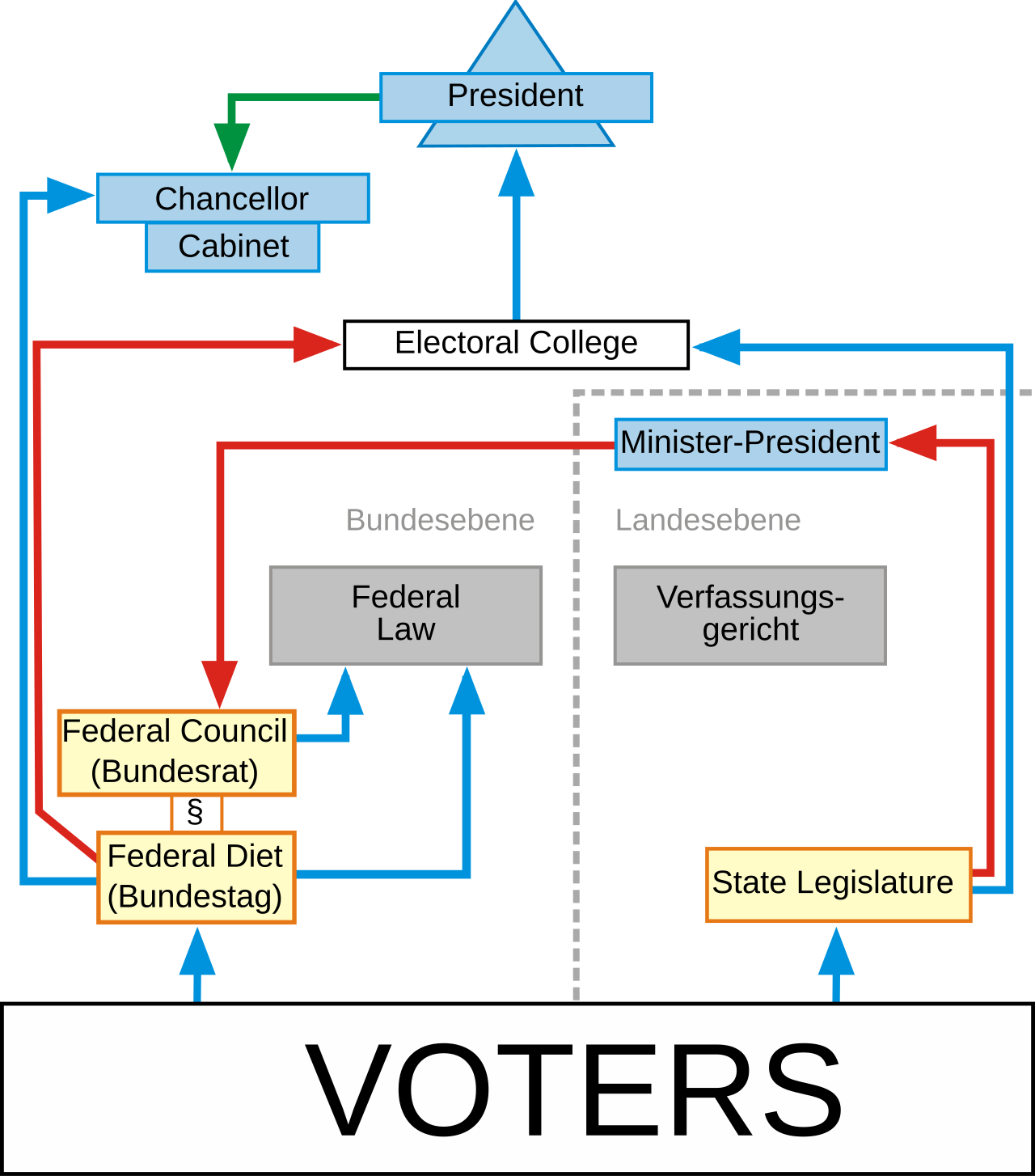
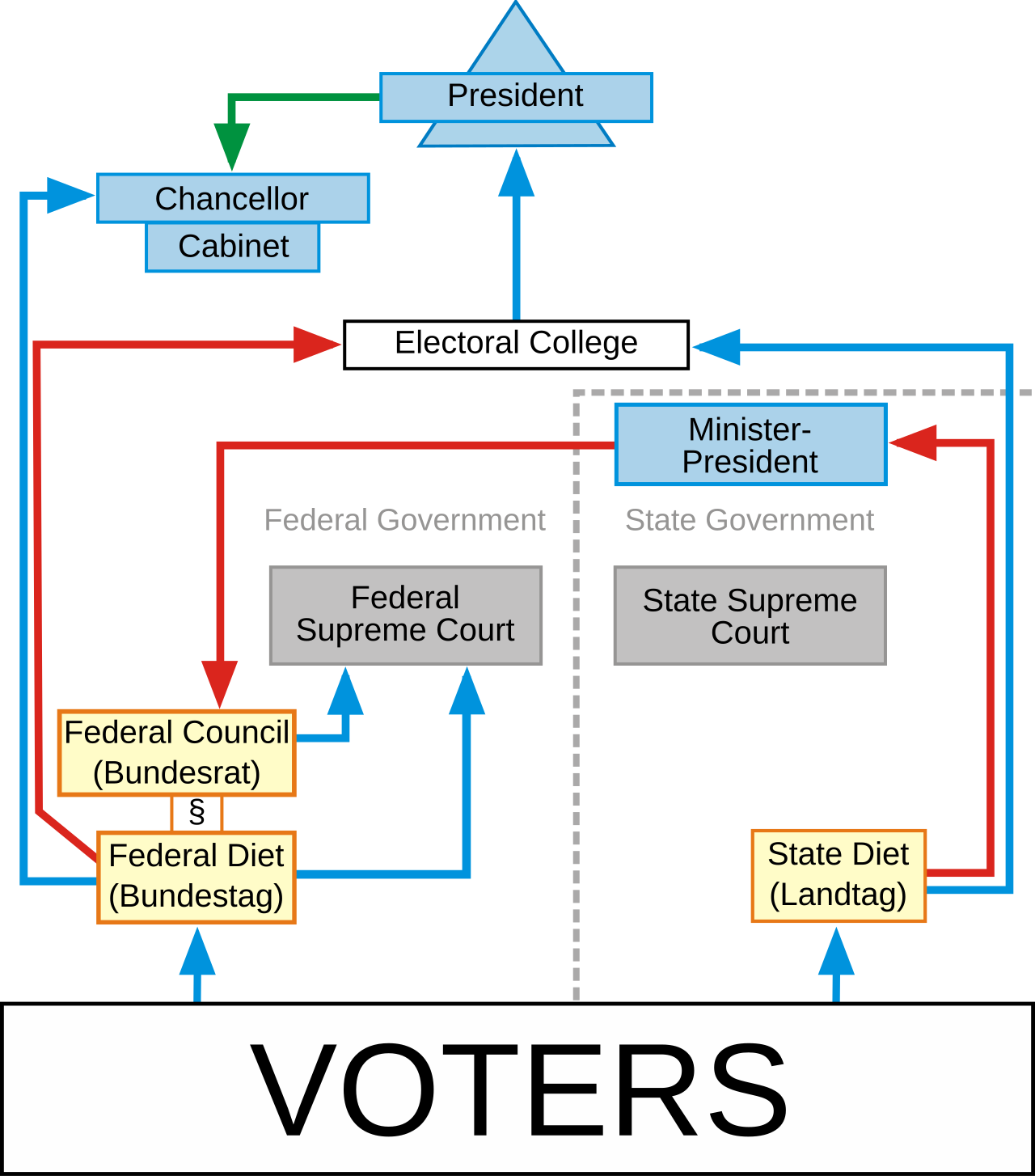
Politisches_System_in_Deutschland.svg : Mortadelo2005 derivative work: TastyCake · CC BY-SA 3.0
A political system is the form of political organization that can be observed, recognized, or otherwise declared by a society or state. It defines the process for making official government decisions and usually comprises the governmental legal and economic system, social and cultural system, and other state and government specific systems.
- Definition
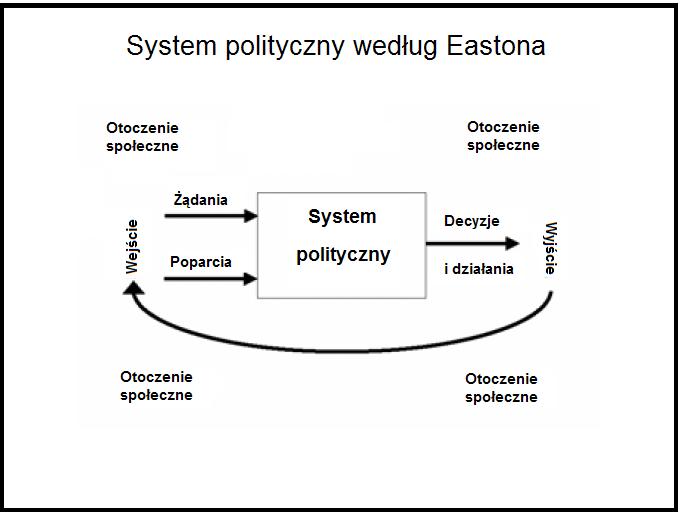
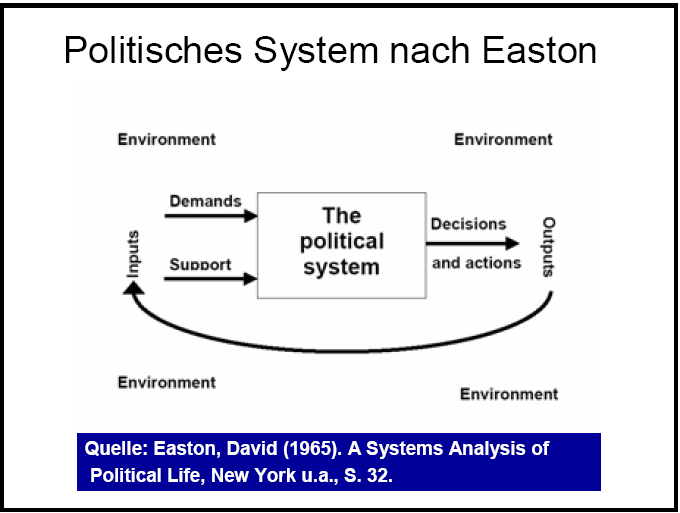
- The interactions through which values are authoritatively allocated for a society (David Easton)
- Basic classification
- Uncentralized systems (band society, tribe) and centralized governments (chiefdom, sovereign state, supranational systems, empires, leagues)
- Social-political classification
- Democracies, totalitarian regimes, authoritarian regimes, hybrid regimes, and monarchies
- Key scholars mentioned
- David Easton, Juan José Linz
- Scope
- Political science, sociology, social anthropology
Lore & Background
Supranational political systems are created by independent nations to reach a common goal. Empires are widespread states of different ethnicities under single rule, while leagues are international organizations of states coming together for a single common purpose. In social political science, the sociological interest is in figuring out who holds power within the relationship between the government and its people.
Reader's Guide
The concept of a political system is central to political science, providing a framework for analyzing how societies organize authority and make decisions. The classification into uncentralized and centralized systems helps anthropologists and political scientists compare different forms of governance across cultures. The social-political classification along a spectrum from democracies to totalitarian regimes, with authoritarian and hybrid regimes in between, reflects the liberal values prevalent in the Western world. Monarchies may be included as a standalone entity or as a hybrid system. Scholars generally refer to a dictatorship as either a form of authoritarianism or totalitarianism. The definition by David Easton emphasizes the authoritative allocation of values, highlighting the process by which laws are made and public resources allocated. Understanding political systems is essential for analyzing power dynamics, government influence on people and economy, and the relationships among decision-makers.
Did You Know?
- A band society consists of no more than 30 to 50 individuals and can cease to exist if a small group walks out.
- Complex chiefdoms have two or even three tiers of political hierarchy.
- Leagues are different from empires as they only seek to fulfil a single goal.
- According to Yale professor Juan José Linz, there are three main types of political systems today: democracies, totalitarian regimes, and authoritarian regimes.
Ideological Identity and the Socialist Question
Social democracy occupies a contested space within the broader left. Scholars disagree on whether it constitutes a distinct ideology or remains embedded within the socialist tradition. At its core, the movement champions political and economic democracy while pursuing social equality through gradual, reformist, and democratic pathways rather than revolutionary upheaval. Among practitioners, attitudes toward socialism itself remain divided: some maintain it as a long-term destination, viewing social democracy as the democratic vehicle for getting there, while others treat it as an ethical compass guiding reforms within an existing capitalist framework. This internal tension means that modern social democracies retain private ownership and market structures, even as they layer robust public services and redistribution on top. In everyday political discourse, the boundary between social democracy and democratic socialism frequently blurs, with the two terms often used interchangeably despite their divergent end goals—one seeks to reform capitalism, the other to abolish it.
Economic Vision and the Welfare Architecture
In practice, social democracy has crystallized into a model that preserves a predominantly capitalist economy while wrapping it in an extensive welfare state. The policy toolkit includes income redistribution, market regulation in the public interest, and universally accessible public services spanning child care, education, elderly care, health care, and workers' compensation. The movement maintains a deep institutional bond with trade unions and the wider labour movement, actively supporting mechanisms that bring democratic decision-making into the economic sphere—collective bargaining and co-determination rights for workers being prime examples. Economically, the emphasis falls on curbing inequality, eliminating the oppression of underprivileged groups, and eradicating poverty, all while upholding representative and participatory democracy as the governing framework. The result is a system where private property predominates but the state intervenes decisively to ensure that the outcomes of market activity serve social justice rather than concentrating wealth in narrow hands.
From Revolutionary Roots to Reformist Practice
The intellectual lineage of social democracy stretches back to the nineteenth-century labour movement, drawing on both the reformist socialism of Ferdinand Lassalle and the internationalist revolutionary currents of Marx and Engels. Initially a catch-all label encompassing diverse socialist tendencies—excluding only anarchism—the term underwent a decisive transformation after the Russian Revolution. Reformist socialists who opposed both revolutionary tactics and the authoritarianism of the Soviet model began to identify specifically as social democrats, though the long-term goal of abolishing capitalism was still formally retained. By the 1990s, that goal had effectively been set aside: social democrats embraced mixed economies dominated by private property and shifted their strategy from replacing capitalism to regulating it. The movement became closely associated with Keynesian economics, the Nordic model, and the welfare state, marking a profound departure from its early-twentieth-century identity as organized Marxism toward a posture of organized reformism.
The Third Way and Contemporary Reinterpretation
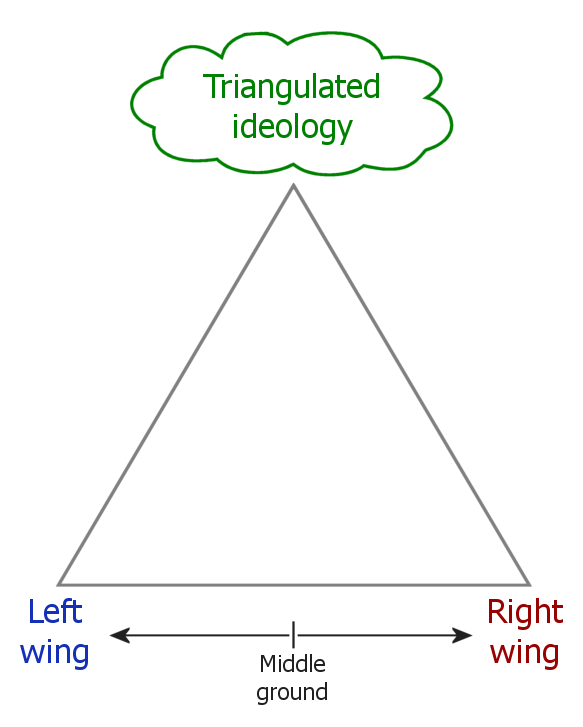
The 1990s gave rise to the Third Way, an offshoot of social democracy that sought to fuse economic liberalism with social democratic economic policies and centre-left social commitments. Some social democratic parties embraced this reconceptualization, presenting themselves as modernizers who could reconcile market dynamism with social protection. However, political scientists and analysts have frequently characterized the Third Way as effectively neoliberal, arguing that its emphasis on market mechanisms diluted the redistributive and regulatory commitments that had defined the tradition. This split highlights a broader tension within the movement: how far should society intervene, and whether the existing government remains the appropriate vehicle for structural change. Despite these internal disagreements, social democrats, anarchists, communists, and syndicalists all trace their intellectual ancestry to the First International, sharing terminology, symbolism such as the colour red, and a common critique of the social effects of private ownership and capital control.
Gallery
Frequently Asked Questions
Who is Political system?
A political system is the structured framework a society uses to make authoritative decisions and distribute values among its members. It encompasses the legal, economic, social, and cultural institutions that together govern how a state or community operates.
What are Political system's powers/role?
Its core function is to define how official government decisions get made and how authority is allocated across a population. It ties together the legal, economic, and social structures into a coherent mechanism for collective governance.
How does Political system's story end?
There is no single fixed endpoint; political systems evolve as societies shift from uncentralized band or tribal arrangements into chiefdoms, sovereign states, empires, and supranational leagues. The trajectory depends on how a community reorganizes its decision-making over time.
Why is Political system important?
It provides the observable structure through which any society channels its values into authoritative allocations, making collective life governable rather than chaotic. Without it, there would be no recognized mechanism for resolving disputes or distributing resources.
What are Political system's main categories?
Scholars such as Juan José Linz and David Easton classify them along several axes, including uncentralized versus centralized forms and social-political types like democracies, monarchies, authoritarian and totalitarian regimes, and hybrid systems. These categories help researchers compare how different societies organize power.
More in Economic And Social Concepts 1-20
Spotted an error? Know more?
This is a living reference — every entry is fact-audited, and reader corrections feed straight into our audit queue. Suggest an edit · See this site's audit record